[01] ┌─┐
NATIVE
No LLVM. No libc. Proprietary self-hosting native backend.
▍ Every instruction emitted with binary precision.
 CHIBA
v0.6.13
CHIBA
v0.6.13 No LLVM. No libc. Proprietary self-hosting native backend.
ADTs, row polymorphism, first-class continuations.
Answer Type tracks continuation boundaries.
ATP proves stack depth bounds at compile-time.
Tracks resources through function boundaries.
Built for deterministic cycle-by-cycle control.
Parser resumes from valid sync points locally.
Compiler notes, proof sketches, backend experiments, and deterministic systems logs — read the manifesto behind it.
A Chiba note about a strange two-agent experiment: the self-bootstrap path became messy, while the Rust reference compiler came out absurdly clean, forcing a rethink of how LLMs learn language style.
Chiba Level-1 did not appear out of nowhere. It was assembled through specs, harnesses, context engineering, agent loops, and finally Codex turning a prepared pile of documents and Level-0 code into a real next-stage compiler.
Zig once promised directness and control, but recent governance and ecosystem shocks around Bun, AI-assisted forks, and accepted language churn expose a deeper problem: a systems language needs a leash, not just velocity.
After two weeks of hard work, Chiba-level0 has gone from an initial Rust demo to hand-written assembly and then to an LLM-assisted bootstrap path, and the next step is to build chibalex and chibacc for Level-1 self-hosting.
新的 docs 区已经接入站内,面向 CHIBA level-1 的核心语言、控制流、内存模型、包系统与 lowering 规则。
A site-native entry into the CHIBA level-1 spec, so readers can browse implementation-facing language rules without leaving the main site.
> ChibaLex 是 Chiba 生态自带的词法工具。
Follow the current CHIBA language rule and jump into the full section from the landing page.
> ChibaCC 是 Chiba 生态自带的语法分析工具。
Follow the current CHIBA language rule and jump into the full section from the landing page.
本文描述 Chiba level-1 的内存模型、隐式 `reset`、值与引用区分、以及 escape legality。
Follow the current CHIBA language rule and jump into the full section from the landing page.
The CHIBASF(prepare to register) is a non-profit founded (not yet) to support development of the language. It offers paid work at competitive rates to a small number of core contributors.
Chiba Labs(not yet) provides commercial support and proprietary extensions to fund the core protocol's longevity. We specialize in industry-grade optimization and neural computation.
Advanced profile-guided optimizations for enterprise-scale deployments.
Deterministic AI libraries with formal tensor verification for safety-critical inference.
The following companies provide direct financial support to the CHIBA Software Foundation, enabling us to pay core contributors and maintain a neutral toolchain.
Sponsorship ensures CHIBA remains a permanent fixture of the systems programming landscape.
The CHIBA community is decentralized. Anyone is free to start and maintain their own space. There is no concept of "official" or "unofficial"; each gathering place has its own moderators and rules.
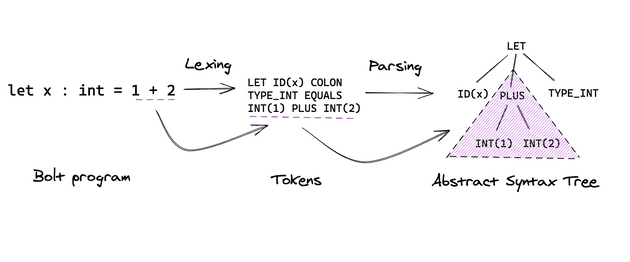
See all CommunitiesThe CHIBA repository is at https://github.com/chiba-lang — issue tracker and proposals hosted there.
Browse Source Code & ProposalsThink FP Run in ASM